
The Inside Story of a Small Startup Acquisition (Part 2)


Photo by psiaki

Why I Bought My Next Startup (Instead of Building It)
This is part 2 in a series covering my acquisition of HitTailpart 1 went to the top of Hacker News last week and I have a slew of questions from that discussion that I will answer next week.

But first I want to address the most common question I hear when I tell someone I acquired a startup:

Why did you buy instead of building?

If you’re a developer you’re probably scratching your head wondering how I could pass up the chance to do the awesome green field development. A new project with no legacy baggage…this is the stuff we live for!

But I did indeed opt to plunk down my hard earned cash instead of hunkering down for 6 months in my dev cave, and what follows are my reasons for doing so.

Continue reading →

The Inside Story of a Small Startup Acquisition (Part 1)


Photo by psiaki

Based on the title of this post you might be thinking I have mad stacks of money in the bank.

That I’ve had a few “exits” and instead of hunkering down and writing code for 6 months I opted to talk to a few of my buddies at the yacht club and purchase a primed and growing social network for somewhere in the mid-seven figures.

Indeed, I did buy my latest startup, but the deal was done from a spare bedroom of my suburban home in Fresno, California for less than most people pay for a new car. And the funds came from revenue generated by my portfolio of web applications and websites that I’ve built over the past several years.

This acquisition is a long story, but if you have a few minutes let me tell you the best parts.

Continue reading →

Announcing MicroConf 2012: The Conference for Self-Funded Startups and Single Founders

MicroConf 2012

I can’t believe it’s this time of year again. MicroConf is in the air. If you’re starting, or thinking about starting, a self-funded startup this is the place to be in April.

My co-host and I are crafting a line-up of speakers that will be speaking to your specific needs as a bootstrapper, rather than someone with a bazillion dollars of funding in the bank. Honestly, MicroConf is unlike any conference you’ve ever attended.

First things first, here are the things we’ve nailed down so far:

MicroConf 2012: The Conference for Self-Funded Startups and Single Founders

Speakers Include

128 pre-release tickets will be available next week (until we sell out).

Who Should Attend?
Anyone launching a startup with no outside funding who wants to hang out with and learn from 128 of today’s leading founders and entrepreneurs. We are intentionally keeping the conference small based on feedback from last year.

Wait…you didn’t hear about last year’s MicroConf?! You must check out this blog post or this podcast episode. Then sign up for the early bird notification list.

Sounds Awesome, What Should I Do Next?
We’re limiting total attendance to 128 and expect to sell out quickly. If this is up your alley, here are the next two things you’ll want to do:

  1. Sign up to be notified about discounted pre-release tickets here
  2. Tweet it!

It’s going to be a blast! Hope you can make it.

What’s a Better Way to Research a Market: Surveys or Experiments?


Photo by Seattle Municipal Archives

I received the following question from a reader a few weeks back:

I’m considering creating a mobile app and I want to know quick/effective ways to validate some of my assumptions. Is it more effective to put out small experiments that test your assumptions, or are surveys of the possible users a better approach?

My answer: it depends on what you’re trying to test.

Continue reading →

[Video] Conversion Review of My Book’s Marketing Website

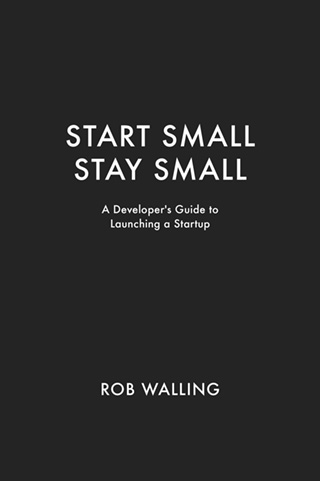
Here’s a screencast I recently recorded with Derek Halpern of Social Triggers where he gives me a thorough review of the marketing website for my book Start Small, Stay Small: A Developer’s Guide to Launching a Startup, with specific ideas on improving conversions.

Once you’re too close to a design it’s hard to view it with an objective eye. That’s where external feedback from a knowledgeable source can help you discover potential improvements, as Derek has done in this video.

Please enjoy – it’s just over 15 minutes and it’s filled with insights on building a high-converting marketing website.

Direct link

Can Paid Customer Acquisition Work With Freemium?


Photo by stevendepolo

I received the following question from a reader:

I was wondering if you had any thoughts on cost of customer acquisition for freemium businesses. When you calculate it out, it seems that paid marketing efforts like AdWords are almost universally doomed to fail. Our lifetime value of a customer is only around $1 when you factor in a high initial churn and all the free users. I imagine companies like Evernote are in a very similar position since they have a similar pricing model.

We are obviously hitting social media, PR, etc. quite hard, but I don’t think paid acquisition could possibly work here. Have you seen paid acquisition work for freemium businesses?

Continue reading →

Why ‘Stop Watching TV’ is Bad Time Management Advice

About the author: Robert Graham is a solo founder and maintains a blog about the experience. Robert has been working in software since 2005. He is a Ph.D. dropout who spent time working for Google. Someday he’d like to work for himself.

I don’t know if I have ever read an article about time management that didn’t have a collection of statistics about how much TV the average American watches followed by telling you that those hours are now free for you to use.

That advice isn’t really useful. Giving things up is hard. How do you quit TV? What if you don’t watch much? Isn’t quitting an addictive habit hard? What if you really enjoy watching TV? Read on, my friend.

I’m going to talk you through a few ways to better manage your time in order of efficacy.

Continue reading →

Paid Customer Acquisition for SaaS, Simple Diagrams, the True Cost of Commuting, and more…

When Does Paid Acquisition Work for SaaS Startups? – The right question to ask, with a solid analysis.

Simple Diagrams – If you need to create simple diagrams quickly, Simple Diagrams is supremely cool. Love the UI.

The True Cost of Commuting – “You Could Buy a House Priced $15,900 More for Each Mile You Move Closer to Work.” Ouch.

Full Service Kindle Publishing for $50 – I wish this was out when I paid $300 to have my book converted to Kindle.

Read Entrepreneur Magazine for Free – On your iOS device. Yes, magazines are old school, but Entrepreneur has decent stuff from time to time.

And finally, Derek Sivers, The Startup Daily and HN-Books review Start Small, Stay Small: A Developer’s Guide to Launching a Startup

9 Ways to Decrease Your Chance of Bootstrapping a Successful Company


Photo by iamjohntmeyer

The more I learn about startups the more I realize that one’s chance of succeeding is a continuum rather than some kind of binary state.

In other words, when you read a blog post that talks about “X Ways to Succeed with Your Startup” what they really mean is “X Ways to Potentially Increase Your Chance of Success With Your Startup. But the second title is too clumsy so we bloggers abbreviate.

With that in mind, I’ve had this list sitting around for a long time, debating the best way to present it. The problem with this kind of list is that some people read it and see they are doing some of the things I’ve listed and they panic. This panic results in a need to rationalize their behavior and convince themselves they are not travelling a path to certain doom. Who wants to admit that?

But that’s not the point this list. As you read it keep two things in mind:

Continue reading →

Ten Highly Successful Bootstrapped Startups


Photo by earthlightbooks

This is a guest article by Saba Younus. Saba currently works as the operations manager (Sumo) at AppSumo. When she’s not working to create the best experience for each and every user, she spends her time scouring the web for juicy details about the startup world.

===

Who says a bootstrapped startup can’t succeed?

A lot of entrepreneurs think they need piles of money to make their startup a success, but that’s not always the case. Here are 10 bootstrapped companies that did it on their own with no outside funding.

Continue reading →